This blog is written solely by Max Greenblum. The contents of this website are mine personally and do not reflect any position of the U.S. government or the Peace Corps.

Saturday, February 19, 2011

February!

Since my two-week vacation to end 2010 and start 2011, I’ve been laying low in San Luis, not really leaving my site at all and focusing on getting some new projects started. However, despite the fact that my travels have ended, life has become no more routine and remained just as unpredictable every day. It has been awhile since the last time I posted anything, so here is my best effort at trying to summarize some of the more newsworthy items of the last month and half:

- Tomorrow I will be participating in my first-ever half-marathon. If any of you want sign-up and catch a last minute flight to come down and run with me, here is the link: www.maratonyoamoes.com. And if your only scared of the distance, there is also an 11K (a quarter-marathon) option. I’m sure to need all the support I can get. While I did start preparing three or four weeks ago, during the dry season in El Salvador the roads around my community are seemingly just paths of loose dust waiting ready to fly up and literally blind you in the slightest wind or hint of footsteps. Thus, my only real option has been to run laps around the definitely way-smaller than regulation soccer field near my house. This, undoubtedly, is not the best way to prepare for a 13.1 mile adventure. I’ve just been running for time, one day 90 minutes, another day 75, or maybe when I’m feeling lazy only 45. While I do know that I usually complete about 60 laps in 90 minutes, I have absolutely no idea how far I’m actually running…we’ll see how tomorrow goes.

- Despite that fact that my Spanish really has come around to the point that I only rarely don’t understand what someone is saying and I virtually always can express any idea I want to, there are still a few cultural issues I struggle with. Foremost is the backtone I somehow purchased for my cell phone. Whenever anyone calls me, instead of hearing a ringing until I answer, they are treated to a very sexual Shakira song. Salvadorans, specifically some of the people I have been working with in the Ministry of Agriculture and my neighbors in San Luis, find it absolutely hysterical and never get their fill of letting me know how feminine—not an issue to be taken lightly to Salvadorans—my backtone is. I still have absolutely no idea how I managed to buy the backtone and I certainly can’t figure out how to change it; I’m just praying it’s a purchase that will expire after a month and this chapter of my Salvadoran “acculturation” will quickly pass.

- In past weeks I was focusing more on organizing some larger, long-term grants and projects, but this week I spent my time on slightly more immediately tangible projects, which has been a nice change. I have started the painting of a large map of the community which will be hung near the entrance to San Luis. I also organized the next round of shampoo, which my women’s group will be making in the coming week. The shampoo has proven to be tremendously popular and the group is growing along with our shampoo’s fan club. People from both a Salvadoran NGO and the Ministry of Agriculture will be coming to our next two meetings to learn how to make the shampoo. While demand for the aloe vera flavor was high and it sold very quickly, the success of the strawberry was a little more limited, so we’ll be trying out vanilla instead of the strawberry for our second round of shampoo. I’m also exploring the ideas of having labels printed and soliciting a place in the market to sell the shampoo on a much larger and more official scale, but so far the women in my group have been very hesitant to sell anything in the market—that is a cultural issue I’m going to have to find a way around if I want to expand the group to that level. I also have spent some time organizing a training session for the local sugar cane cooperative at the national agricultural university in late March, for once the sugar cane harvest has ended, about newer varieties of sugar cane and ways the cooperative, which has been using the same varieties for years, can improve their production.

- It seems my experiences with Salvadoran food will never settle down. Every few weeks I start to think I have finally seen it all, when out of nowhere comes some new “specialty” to challenge my attitude towards what I am willing to put in my mouth. This drama continued earlier this week, when I was served two fish-head pupusas for dinner. Pupusas are a Salvadoran staple which I had previously embraced whole-heartedly. They are basically thin corn tortillas filled with a pocket of true goodness in the middle which can consist of a wide range of options—cheese, beans, squash, jalapeños, chicken, laroco or chipilin (two very flavorful Salvadoran flowers). Fish-head pupusas, however, were something I had never heard of or seen. While I managed to eat the pupusas, and they really didn’t taste close to bad as they looked, I went to sleep with dreams of nothing more than a comfortable Salvadoran breakfast in the morning—then woke up to fish head soup. However, life has improved. No fish heads have been seen since Tuesday morning.

- One consistent goal of mine as a Volunteer is to help and support the natural forest reserve, Area Natural Protegida La Magdalena, located near my site. I often make visits there and have helped organize many of their conservation and environmental education activities and efforts in and around San Luis. I just received a $500 grant I had successfully applied for to help them pay for a composting latrine in their newly-constructed camping area. Since the camping area borders a river which is the source of water for many nearby communities, including mine, and, being a national forest reserve, they inherently are much more environmentally-conscious than just about any Salvadoran, they did not want to construct the traditional pit latrine, which would invariably lead to contamination of the river. However, the costs of a composting latrine, which instead of leaking and contaminating the environment will produce fertilizer and compost, are much higher. Thus, the $500 grant. Here is a link to the webpage of the organization which has supplied the money and a further description of my project, including a few pictures: http://appropriateprojects.com/node/548.

- A few weeks ago, near the starting of November, I spent a few days in the city of Santa Ana, working with a team of American doctors who were in El Salvador for a medical mission. They were supplying free eye operations to poor, rural Salvadorans, including a few from my community. However, they didn’t speak Spanish, so they needed someone to translate. This meant I spent 4 days staying in a nice hotel, taking warm showers, and eating good food while just asking Salvadorans basic questions like “have you eaten today?,” “are you allergic to any medications?,” (the answer was always no…most of these people had never even properly visited a doctor’s office) or “do you want cookies?” (after the surgeries had been completed, of course). Other go-to phrases were, “don’t blink,” “she is about to put that needle in your arm,” “come back for a check-up tomorrow morning,” and “take one of these pills every 6 hours.” While basic and mindless, it was actually important and made many surgeries, the majority of which were cataracts, possible. I also got a great opportunity to observe surgeries and surgeons in action, which I’d never really experienced before. And while I’m still sure I’ll never become a Grey’s Anatomy or House fanatic, I do now understand why hospital shows are such a hit—it was a pretty fun and interesting environment. The surgeons were also incredibly insightful, repeatedly letting me peer through their microscopes during the surgeries in order to see all the amazing little cuts and incisions they literally do in the eyeball. Additionally, working as the only link between American doctors and the Salvadoran culture gave me multiple opportunities to have some good, old-fashioned fun. One day during the lunch break between surgeries (each doctor was averaging about 12 operations a day and we were working from 7 am to 8 pm every day) a Salvadoran women selling cups of milk and rice (known as arroz con leche, a traditional Salvadoran snack, usually has some cinnamon and vanilla too). A few naïve nurses asked me what she was selling. A little exasperated from their helplessness after days of translating even the most basic conversations, I sarcastically told them it was iguana milk. They didn’t catch the sarcasm. Immediately very curious, I just went with it, figuring the truth would shortly become obvious, telling them it was a Salvadoran specialty only found in western El Salvador and that it would be extremely rude to the woman and the culture if they didn’t drink at least one cup. Not wanting to offend anyone, but still very hesitantly, each quickly forced down a cup of the “iguana milk.” Apparently the familiar taste of milk or cinnamon didn’t dawn on them. After a few more minutes of richly illustrated, and sarcastic, details from me, they scurried off to find the leader of the medical mission trip to request a side trip on their last day in the country, a free day, to one of the local “iguana farms” I had told them about. I don’t know what happened after that, but I do know I left Santa Ana two days later and they were still waiting for the “iguana milk” lady to return so they could have me ask her questions about the “painstaking process” of milking iguanas, of which I had only been able to provide the most basic details.

- I hate to end this blog entry on a down note, but I do wish to accurately reflect all of my life in El Salvador, and therefore, want to include the tragedy and sadness, alongside my laughs and adventures, to truly express the entire experience of life in poor and rural El Salvador. Two days ago, a baby in my community died. She was only five days old. Her mother, who is only 17, went into labor and gave birth after only 5 months of pregnancy and is still very sick and remains dangerously near death herself. They are all members of one of the poorest families in San Luis—a family even other residents of San Luis would consider poor, which is saying quite a bit. I lived in the United States for 22 years before moving to El Salvador—in all that time I attended just 2 funerals. I’ve lived in El Salvador for 7 months tomorrow and have already attended 3 more.

Tuesday, February 15, 2011

who says there is no need for plaid onesies in el salvador?


my new table, custom-made for just $40


teaching my women's group to make shampoo


the neighbors butchering a pig...


working on a water project with the ministry of health

Monday, January 24, 2011

A Weekend of Surprises

While the past week has had its fair share of quirks, oddities, and laughs, this coming week promises to be just as interesting. For the past few weeks and for the upcoming month I’ve really been staying in my site as much as possible and much more than I had in the past. This is part of an effort to make a big push with a few of my projects that floundered a little while I was traveling for two weeks around Christmas and New Years and to let my bank account recover from my most recent travels and hopefully prepare itself for my next round of Central American adventures. However, to my pleasant surprise, while life in San Luis may not be as initially exciting as exploring monumental Mayan ruins and relaxing at gorgeous Pacific beaches, it none the less holds just as many, if not more, daily surprises and excitement.

Just yesterday, during one of the many digressions that led what should have been a 2-hour morning meeting of mine to last till past 3 pm, over 7 hours in total, a Salvadoran engineer helping my community with our planning of an improved water system commented on how weird Mexicans were because they ate grasshoppers—“sometimes even in chocolate.” I sarcastically contested that it was sort of comical for a Salvadoran to really make that comment, since they eat frogs, chicken feet, iguana, turtle eggs, snake, and raccoon, along with just about any thing else that moves. The entire room just shook their heads and worriedly mumbled that since I was a “gringo norteamericano” I would just never understand some things. After that and everything else that occurred this past weekend, I guess, maybe, they were right.

This past Friday I lost about half my girl’s soccer team, despite the fact that I will most likely be receiving a $500 grant in the next few weeks to finally buy them a set of uniforms, new balls and practice equipment, and pay for San Luis to host a tournament with three other guest teams from neighboring communities. It all started innocently when the Evangelical church across the street from my house announced they would be hosting a movie night and just about the entire population of San Luis proceeded to show up. Despite the fact that just last week I had found a great pirated copy of Forest Gump in the Santa Ana market, I was still excited to get a chance to watch a movie, which I figured would be something from the action or comedy genre…but couldn’t have been more wrong. The church showed a 2-hour documentary featuring numerous interviews with people who described the moments when they had “found their God” then went on to describe the improvements to their lives afterward. The movie also featured interesting interpretations of visits from the devil and other various demons, images of Pope John Paul being ignited and engulfed in flames, and a finale of a re-enacted exorcism. While I only made it through the first 20 minutes of the movie before politely excusing myself to go eat pupusas outside then retreat to my house to go to sleep early (I didn’t have too many other options—the amount of power needed to project the movie across the street meant my house had lost its power), the movie proved to be so inspiring (or frightening…I guess it just depends what perspective you take) that half my girl’s soccer team, including the captain, who even co-signed the aforementioned grant request, all took an oath of sorts to revoke the life of sin and devote their life, going forward, to the church. For Evangelicals in El Salvador, that means soccer is forbidden—it is a sin in their religion. While I still don’t know exactly what I’ll be doing with the grant money, since my girl’s team is now all but inexistent (that movie night really did seem so promising early on…), I think my boy’s soccer team may just be receiving a surprise round of new jerseys and equipment pretty in the coming month. I guess sometimes even the seemingly most simple and complication-free projects can fall apart and some things about development work will just never be understood or overcome.

In another notable surprise from the last few days, I was woken up at 4:30 am Saturday morning by screams of, what seemed to be, an absolutely petrified pig. After fruitlessly attempting to go back to sleep for over 30 minutes thanks to the continuing screaming of the pig, I finally decided I at least wanted to get to the bottom of what exactly was happening. Venturing down the street and across the bridge led by the beam of my flashlight (still so early in the morning that it was good and dark) I discovered a family just a few houses down from me had decided to slaughter their pig. What had led them to do that at such an ungodly hour or why it took them so long to kill the darn thing, I guess is just yet another aspect of life in San Luis I will never understand.

Also, in the impossible to understand category—the lunch I was served by a lady in a neighboring community, Casa Blanca, during a lunch break in an almost all-day meeting yesterday (the same one featuring the conversation about hard to believe, or imagine, foods)…hard-boiled eggs in a very-healthy size dollop of tomato sauce (actually just ketchup).

In the coming week, I will be teaching my newly-formed women’s group how to make their first batch of shampoo, in an attempt to start some small, but sustainable, income-generation programs in San Luis, and making a trip to the Ministry of the Environment in San Salvador with the leaders of my community and a neighboring community to pitch our proposed water project. Despite the fact that there is sure to be much occur which is outside my realm of comprehension, I’m hopeful that through all that I’ll likely never understand, I’ll continue to have a great time every day and possibly make a little bit of a difference down here in El Salvador as well.

Saturday, January 15, 2011

Photos From A Second Trip To Tacuba


Vacation!

I recently completed a good two or three weeks traveling around El Salvador and Honduras. That is a big part of why it has been so long since I last posted. To make up for it, I’ll try and highlight some of the highlights of my travels:

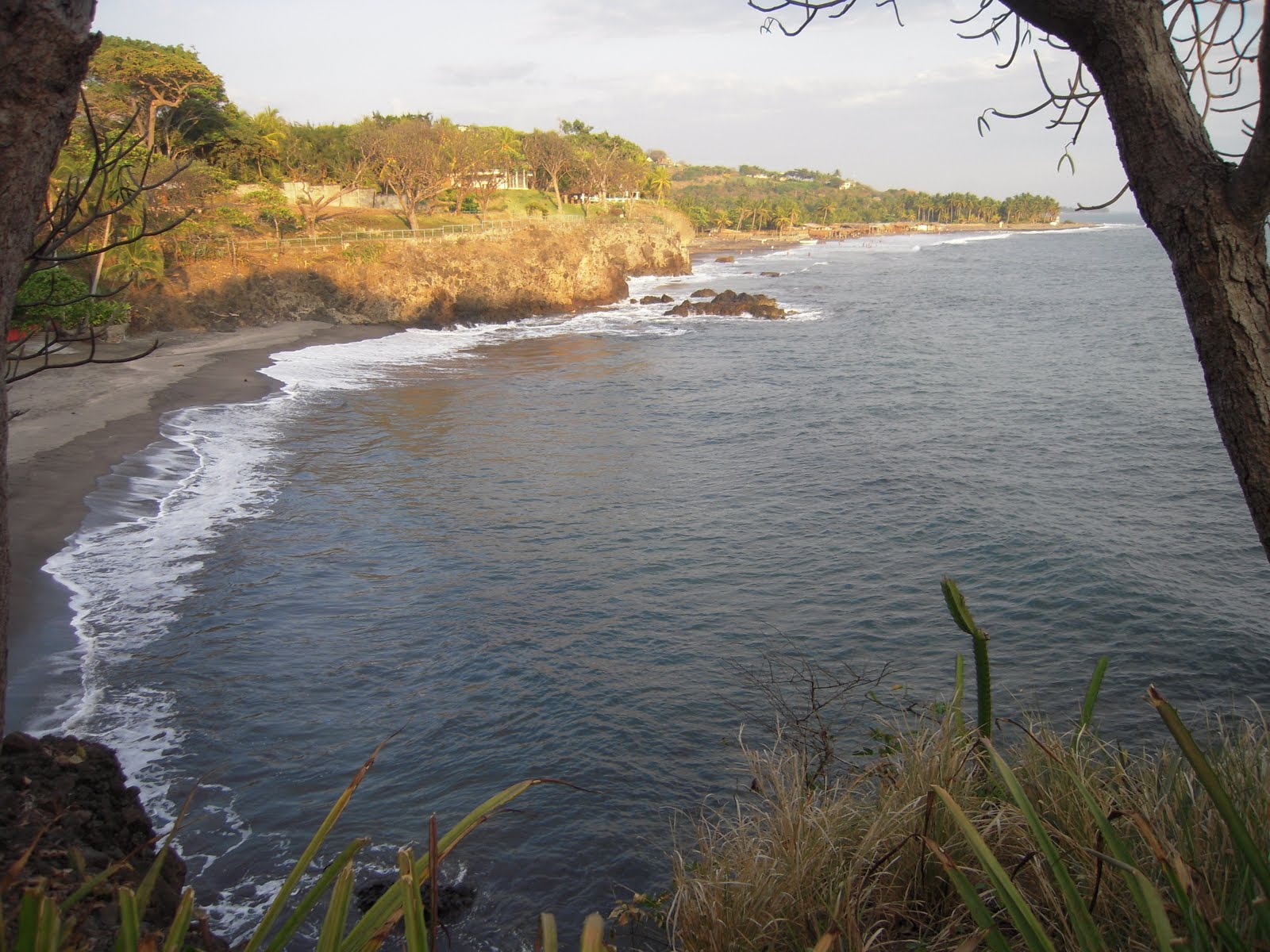
Playa el Sunzal: Christmas Day and New Years Day are the only two days of the year when buses do not run in El Salvador. However, the 25th of the December I needed to get to Sal Salvador. I started out hitch-hiking early in the morning figuring it wouldn’t be too hard to get to San Salvador based on my belief in a forthcoming bounty of Christmas spirit. The very first ride I got was with a family who was headed to the beach but were going to be passing close by San Salvador, through Santa Tecla on their way to the beach, and happily announced to me that they would be able to bring me almost all the way to the capitol city. Within 30 minutes of leaping into the back of their truck I had been convinced to go to the beach with them and promised a ride to the airport later that night. My ease in being able to be convinced to go to the beach with a family of strangers ending up being quite the stroke of luck—turns out their grandparents are the caretakers of a magnificent beach house perched high on a dramatic cliff apparently owned by one of the founders of Western Union. It was located high on cliffs that were buffeted by violent waves throughout the day, but had a set of stairs down to its own private, white sand beach and a pool which would fill up at high tide then provide a perfect place to relax during the rest of the day. On the way to the airport they invited me to come along with them on their next trip down to the beach…and I am excitedly awaiting the call.

Tazumal and Casa Blanca Ruins: These two sets of ruins are located very closet to my site and referred to as the “best” ruins in El Salvador. Frankly, I had been embarrassed that I had yet to visit them. Turns out the ruins are more embarrassing than I was. While Tazumal was pretty cool and its one pyramid was large, well-preserved, and impressive, it remained just one pyramid, so it really took all of 15 minutes to check out. The highlight for me was discovering the surprisingly high number of young Salvadoran couples which apparently go to the ruins to make-out. However, while Tazumal can at least be respected as serviceable ruins, the Casa Blanca really still strikes me as a prank. It featured multiple mounds of earth, a lucky few of which had stones sticking out from the ground, which very serious signs declaring things such as “Structure 3” or “Do Not Climb on the Structure.” None of the mounds even rose above my waist. Maybe it was just my trip to Copan in Honduras a week later, where arguable the best ruins in Central America are located, but I ended up pretty disappointed in El Salvador’s “best” ruins…apparently this just isn’t the place to come for ruins. However, the resourcefulness of Casa Blanca’s staff is commendable. Upon entering, I was quite pleased with myself for bargaining the price down from the tourist price of $3 to just $1, since I kinda am living in El Salvador semi-permanently (at least for two years). While I was leaving, I talked to the managers for a little about potentially bringing my youth group there in the future. While discussing prices, they excitedly invited me to bring my youth group on a Wednesday, when admission was free. Only a few minutes later, while walking away, did I realize it was Wednesday. My pride in bargaining them down to a $1 entrance fee quickly disappeared…
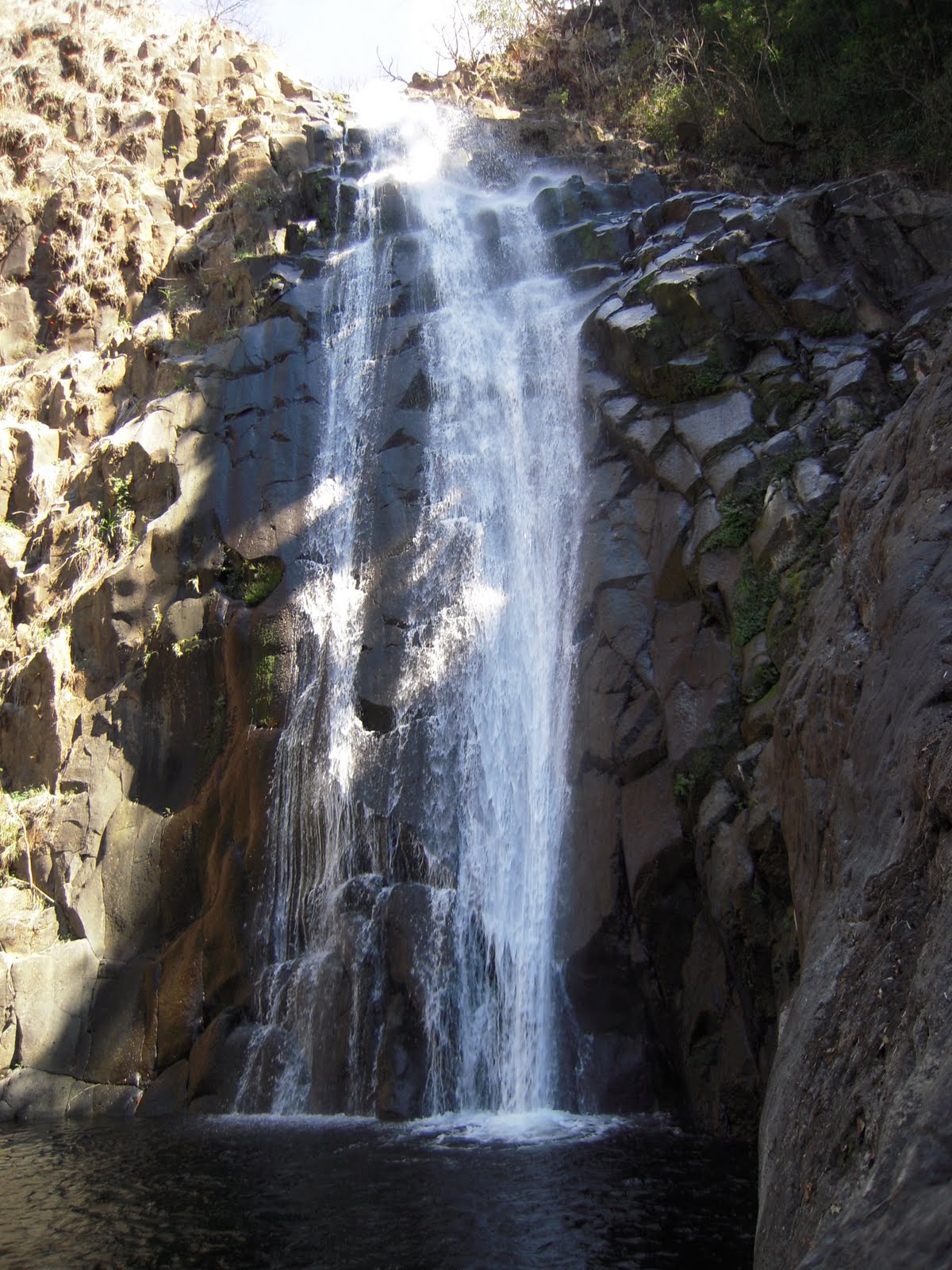
Parque Nacional El Imposible: This national park definitely stands as my favorite place, to date, in El Salvador. Although there are multiple jumping-off point for entering the park, we went in through Tacuba, which also secured its place as my favorite small pueblo in El Salvador for its atmosphere, people, and history. It is perched high in the mountains near the western border of the country, the storefronts up and down all of the streets are all covered with colorful murals, and it features a tiny completely organic and vegetarian restaurant (unheard of in El Salvador) run by a sect of Hindu monks who must have, at some point, gotten very, very lost, but are now inexplicable living there in Tacuba. Interestingly, Tacuba is also the site of the Americas’ first Communist Revolution, which though short-lived, occurred in 1932. We only had one day for El Imposible, but our 7-hour definitely has me excited to get back. We hiked down through coffee plantations then through natural forest, spent 2 or 3 hours wading and swimming through a clean, cold, and very clear river while jumping off a series of 7 or 8 waterfalls and sliding down multiple natural waterslides, then hiking back up through the forest and coffee trees.

Playa El Tunco: Known simply as Tunco in El Salvador, this beach is an international backpackers and surfers haven. It is certainly the only place I’ve been in El Salvador where it is easy to forget you are in El Salvador. English is more or less the first language, long hair and tattoos are commonplace (yet virtually unheard of in the rest of El Salvador), and it is rare to actually meet someone from El Salvador. Its tiny size is also appealing—it boasts only a handful of bars, just one or two hotels, and about 6 or 7 small hostels. We ended up staying in the house of the bar manager of the most popular bar there. Although the beach is rocky and definitely not one of the best beaches for relaxing or swimming in El Salvador, the surf-break is widely regarded as Central America’s best. We ended up only be there for one night, New Year’s Eve, but I can’t wait to go back. The laid-back and relaxed vibes and chance to work on my surfing skills will definitely be a great respite throughout the rest of my two years here in El Salvador. Also, as is a requisite for any location I thoroughly enjoy and intend to return to, Tunco has great food—the international and backpacker influence is clearly visible in the bagels, granola, smoothies, vegetables, and pancakes which dot its menus.

Journey to Honduras: 4.5-hour bus from San Salvador to El Poy (the Honduran border)—standing room only. 1-hour walking across the border and dealing with two fairly strange border stations (the Honduran border agent rejected my first effort to pay my entrance fee claiming my $10 bill was counterfeit). 1-hour van ride from the border to Nuevo Ocotopeque, the closest city in which we could catch the next bus. 3-hour bus ride to La Entrada, the narco-trafficking capitol of Honduras (high-lighted by a driver who took the nearly empty bus as a sign to do his best Formula-1 impression…I honestly think I preferred the slow and packed Salvadoran bus ride). 2-hour van ride in which I spent the first hour hanging out the side door in a crouch position because the van was so packed. The van also featured a puking child and a very aggressive cell-phone vendor.

Copan Ruins: Though I do thoroughly enjoy museums or the like, I usually have about a 2- or, perhaps, a 3-hour time limit before my brain hurts, it all starts to look the same, and all I can think about is food or a bed. We spent about 6 hours wandering around and examining the ruins of Copan and I was never bored for a moment. Although I haven’t been to Tikal in Guatemala, which is supposed to be the only set of Mayan or Central American ruins which rival Copan, I have never been more marveled by both the size and intricate detail in the expansive zone of building featured at Copan. It is particularly well-known for its intricate Stellae, which are tall, stone, statuettes carved on all four sides. The class of stone used in Copan is for some reason harder than stone used in other parts of Central America, so they are particularly more-detailed and better-preserved. Copan also features the Heiroglyphic Stairway, which consists of 63 steps all intricately covered in several thousand glyphs which explain over 300 years of the ruling Mayan dynasty at Copan. Though they are still not fully understood, they are the basis for much of what archaeologists know about Mayan history. Also, there is Central America’s second largest Mayan ball court, mostly cool since after every game their equivalent of the MVP was sacrificed…quite the reward!

Lago de Yojoa: Lago de Yojoa and its nearby Pulhapanzak (almost certainly the world’s hardest-to-pronounce waterfall name) are only part of the reason to visit this part of Honduras. While Lago de Yojoa is beautiful and the 43-meter height (that’s real tall—trust me) of the waterfall, which you can swim under, behind, and all around while marveling at its huge mist, is impressive, the D&D Brewery & Hotel is the real draw here. It is a small brewery set up by an Oregonian (not 100% sure if that is the correct work for a dude, or just anyone, from Oregon) in a very random but gorgeous spot of Central America. It is Honduras’s only microbrewery, and though the beers probably wouldn’t be anything to write home about in the States, it is a great place to chill, listen to music, play cards, have some killer blueberry pancakes, and obviously, enjoy some beer (and the owner even comes out with his slide guitar some nights).